
BE
British Empire
Resolving
Resolving brand mentions across new media
British Empire
Resolving brand mentions across new media
British Empire
Arcmira media summary
Browse British Empire interviews, podcasts & event videos — 28 indexed from Trevor Noah Comedy & Glenn Beck, updated Apr 2026.
The historical political entity discussed as the colonizing force in India and Africa.
Cited as an example of an empire achieving fiscal stability and a trusted currency, later declining.
used by the British Empire to justify the seizure of indigenous lands
The primary subject of the transcript, focusing on its decline and legacy.
the end of the British Empire. Kenya is about to gain its independence. For Churchill, the great imperialist, this is a change he just can't get his head around. Churchill was a lifelong believer in Britain and her empire. Churchill was desperate to hold on to that vision of Britain as a great power. He did not want decolonization to jeopardize white supremacy. There's a temptation to fall back on the tired narrative that these historical figures are products of their time as if to imply that their racism was more acceptable back then. But British attitudes towards colonization was starting to turn. Churchill was in this sense out of touch with the British public. Unable to stop the end of his beloved empire, Churchill becomes increasingly downbeat about his political legacy. He'd said in 1942 that he would not become the king's first minister in order to preside over the liquidation of the British Empire. Nonetheless, the empire which he wanted to preserve is clearly on its way out. He says on at least one occasion, I have achieved everything only to achieve nothing. Eventually, Churchill's wife, Clementine, persuades the 89year-old he must retire. This photo was taken of him as he made his way to the House of Commons for the final time. It's a really interesting image. He is considerably more frail. I love the fact that he's still got his navy polka dot bow tie on though. That's something he's worn throughout his career. It's almost like his sort of political uniform. Churchill has served longer than any other MP in the 20th century. Yet, there's no fanfare during his final visit. Proceedings went on as usual. Nobody noticed when Churchill entered the chamber. He sat down in his usual seat and listened a bit to the debate and then he left the chamber. Churchill walked past the speaker's chair on his way out of the chamber. He turned very awkwardly cuz he was very stiff and bowed to the speaker and walked on. And that was his final goodbye to the House of Commons. Out of politics for the first time in 65 years, Churchill retreats to Kent and his muchloved country home, Chartwell. What you see is a gradual withdrawing into himself. He's clearly no longer capable of the sustained repartee and conversation that he'd been famous for in the past. The things that he takes pleasure from become simpler and simpler to the extent where he enjoys sitting and watching the butterflies in the garden at Chartwell. It's already been decided that this home of the great man is so important it should be preserved. When Churchill dies, it will be given to the National Trust and open to the public. Of course, all of our homes change in terms of decor and use of spaces over time. So, they have to pick a particular point to represent. Churchill's wife, Clementine, spots an opportunity. She starts thinking about how Chartwell could help to shape his legacy. Clementine orders it to be restored to how it had been in its heyday. It's no longer reconfigured as it was to accommodate an elderly man. The grab rails will have to go. Clementine doesn't want people to remember her husband as a daughtering old man. I think it's particularly interesting to think about Lady Churchill curating her husband's legacy. It's Lady Churchill's wish that Chartwell reflect the golden age of Chartwell, which in her mind was the late 20s and 1930s. in those years in the leadup to the Second World War. Clementine sees herself as one of the key guardians for Churchill's legacy and she certainly wasn't afraid to play an active role in shaping that legacy and also removing parts of it that she didn't feel were appropriate. 10 years ago, she took against a portrait given to Churchill by the House of Commons on his 80th birthday. She had it burned. The portrait is a remarkable example of modern art. My grandmother wasn't going to let it see the light of day. She thought it was very unflattering. She would like him to looked as he looked in his finest arm, not as he looked as a very old 80-year-old with his fly buttons looking as though they were about to come undone. It was a very unattractive picture. Churchill's 90th birthday is approaching fast. He and Clementine leave Chartwell and make their way to their London home to celebrate. When he left Chartwell in the autumn of 1964, he didn't know that he wouldn't come back again to the home that he loved. But as this extraordinary life comes to a close, Churchill's fighting spirit will go on to the very end. It's Winston Churchill's 90th birthday. He's celebrating with his family at his London home. We were all around the table and it wasn't a very jolly affair. He was s sitting there and he wasn't really part of the situation. He wasn't aware of what was going on. He was very very very old. Those who were around Churchill in those final years were incredibly protective and discreet. Churchill's mental health is something that was not discussed at the time, but it is clear that it was declining. It would be surprising, given his age, if there hadn't been signs of dementia. Now Churchill's finally retired, Clementine hopes her husband can have a quiet and dignified end. At Sir Winston's house in Hide Park Gate, crowds of well-wishes braved the wintry weather during the birthday celebration of the greatest living Englishman. Among the throng are dozens of television cameras and reporters. Churchill goes to the window to greet the crowds. He's wearing one of his velvet one piece siren suits that he wore during the Second World War. He's clearly very frail, but you can see that even now he still wants to play this role. There are huge numbers of crowds there, plenty of umbrellas showing that they're withstanding the elements in order to be there and Lady Churchill there on hand to help her husband. And then she very purposefully closes the window. She's prepared to allow the crowd a glimpse of him, but no more. For Lady Churchill, Winston came first, second, and third. She poured so much of her time and energy into not only supporting her husband, but advising and being an absolute rock for him throughout their entire marriage. She wants to make sure that his legacy is secured and is keen to do whatever she can to support the continuation of his legacy. Less than a month after his 90th birthday, Churchill has a major stroke and needs roundthe-clock care, but there's still plenty of life in him. Patience was a virtue with which he was totally unacquainted. There are lots of stories about Churchill's refusal to conform with doctor's orders. There's no doubt that he was stubborn and that if he wanted to do something, then he would make it happen. He would still smoke cigars in bed and occasionally set light to the sheets. He wasn't an easy patient. Behind the scenes, top secret plans for what should happen when Churchill finally dies swing into action. These plans, cenamed Operation Hope Not, were first drawn up over 10 years ago and come from the very top. Queen Elizabeth II decides that Winston Churchill will have a state funeral. It is at the monarch's discretion. It's an incredibly rare event in history. Only a handful of individuals have ever been given state funerals. The Queen has known Winston Churchill all of her life. They met first when she was just 2 years old. Having witnessed his role as prime minister in the Second World War. Queen Elizabeth II made arrangements that Winston Churchill should be given a funeral, to use her words, on a scale befitting his position in history. And so from that point onwards, the scale of proceedings grew and grew as time went on. There was a growing sense that he should at the end of his life have an occasion which could be witnessed by as many people as possible. It's very clear that this is going to be an enormous public occasion. When the story gets out that Churchill is seriously ill, his London home is surrounded by people. I arrived at the flat in Hide Park Gate and it was crowds of journalists and people and it was just jam-packed. It becomes a media circus with Churchill's doctor, Lord Morren, giving updates on his health from the doorstep and there has been a cereble thrombosis. Each day the crowds grow larger. Eventually, Clementine asks people to move away from the house. From a distance, the vigil continues as Churchill's health dominates the news. The headline of that newspaper is very significant. It's this is the story of Winston battling death. The story gets told as another example of this great hero struggling in adversity. He kept fighting until the very end. Not everyone is speaking in hush tones around the dying Churchill. Churchill's a symbol of the old order. He becomes a target for the satists. Private eye is founded in 1963 and they start referring to Churchill as the greatest dying Englishman. The legacy Churchill and Clementine have worked so hard to shape is under threat. After several days, Churchill is showing no signs of recovery. His son-in-law, Christopher Ss, arrives to sit at Churchill's bedside. He turns to SS and says, "I am so bored of it all." and then slips into a coma. Churchill's last words, I'm so bored with it all, is very surprising really. Given Churchill's concern with his reputation, you might have expected that Churchill would come up with some witty oneliner, but there was nothing like that. These words, I'm so bored with it all, is such a human emotion, isn't it? 10 days later on the 24th of January 1965, Churchill's family are gathered around his bedside. He had his marmalade cat curled up by his side. It was quite clear what was happening. And he was breathing and breathing and then suddenly he took three long breaths and that was it. The silence exactly 70 years earlier to the day his father Lord Randolph Churchill passed away. But you've not just got that coincidence. There is this incredible fact that for the last 10 years of his life, he has been telling people that he is convinced he is going to pass away on the same day that his father did. Churchill was holding out to die on the same day of his father. A man who had such an influence and impact on his life. Churchill was arguably always trying to prove himself to the memory of his father. And I think what you're seeing here may be the last example of that Churchillian spirit and will in holding out to die on that day. Churchill has died, but his story isn't over. When his long-awwaited funeral finally gets underway, many hope this historic sendoff will unite the nation as never before. It's 3 days since Winston Churchill died. In central London, they're holding a full-scale rehearsal for his state funeral. An event it's hoped will define his legacy as the greatest Englishman for generations to come. The somnity of the procession is very very carefully choreographed. Nothing was being left to chance. Years of planning have gone into Churchill's funeral. But some are concerned that all this pageantry could strike the wrong note in 1960s Britain. You've got to think that at this point you're in the height of the swinging 60s. You are in one of the most exciting cities in the world. We have the satire boom. We have the Beatles. But Churchill's funeral points to an older traditional model of British greatness. In the East End, there's already a problem. After the funeral service, Churchill's coffin is to be carried down the temps, and it's been decided that the cranes of the Docklands should lower their jibs out of respect for the great man. But the dock workers are refusing to do it. We shouldn't assume that everyone admired Churchill as a great man. Because we're usually so preoccupied with the Second World War when we talk about Churchill, we can forget what an incredibly contentious figure he was. Eventually, the Dockers agreed to take part in the funeral for a price. 3 days before Churchill's funeral, the doors of Westminster Hall open for the public to pay their respects as Churchill lies in state. When Winston Churchill dies, he has been the longest serving politician of the 20th century. And so it is fitting that the lying in state take place in Westminster. The scene has been carefully composed. The way that it has been laid out is that your eye is drawn completely to the coffin in the middle, draped in the Union flag, beautifully lit by these candles around the edge. You would have been struck by the sense that you yourself were witnessing history. The public response is overwhelming. Over the course of 3 days, 300,000 people queue in freezing conditions to pay their respects. Among them is Churchill's former secretary, Lady Williams. I remember taking my son to walk past. So, it gets me very upset. I find it too overwhelming. You know, we all who work for him. We love him deep. Even those who have never met Churchill are moved. People felt that they knew him personally. Many of them would have heard Churchill's voice over the airwaves during World War II. Many of them had been in the armed forces or they had been civilians who might have been subjected to bombing raids. This is a kind of elegy for the profound experience of World War II. Some of the memories of which may have become rose tinted with time. The day of Churchill's funeral arrives at 9:45. Big Ben tolls. The coffin of the man who led Britain to victory in the Second World War begins its procession. Not since the last century has the honor of a state funeral been accorded to a commoner. But who more worthy of it than this man who provided us with an image of ourselves as we would wish to be? For those who were lining the streets of London on the day of Winston Churchill's state funeral, it would have felt almost like they've been transported back in time. You're in the height of the swinging 60s and yet for one gray day in January in London is taken over by this pageantry that seems of an age long gone. Over half a million people are lining the streets to watch Churchill's funeral procession. The crowd was silent and my sister and I were in the same carriage, but it was an extraordinary journey. The crowds were so close, you could see the tears in their eyes and it was terribly moving. Along with the mourers, there are 36 cameras along the route broadcasting the event live to a global audience of 350 million people. Britain may have lost its empire, but it can still put on a show. Churchill's funeral is a spectacular epic event. Very, very carefully designed to be covered by the media and in particular by television. Every single thing along the way is designed to celebrate his role as a wartime hero. You've got the 19 gun salute. You've got the fly past. You've got thousands of soldiers lining the route. Cavalry officers in their plumemed helmets and their red cakes. You've got the guards regiments in their bare skins. You've got sailors in blue who are pulling the gun carriages. Churchill's funeral allows Britain's watching on the streets and at home to feel great again because he connects them with the country's finest hour. With Britain's empire at an end, Britain returned to its glory days. and its glory days was its victory in the Second World War. And Churchill personified that victory. The funeral procession arrives at St. Paul's Cathedral for Churchill's memorial service. St. Paul's Cathedral is a really interesting choice. It's arguably more intuitive given his role as politician to have had it at Westminster Abbey, but we know that symbolism played its part in the decision. During the Blitz, St. Paul's miraculous survival became a symbol of British endurance. So it is perhaps fitting then that this building associated with British wartime resilience should host the funeral of the figurehead of the nation spirit of resilience at that time. We are assembled here on the occasion of the burial of a great man. During the service, despite her grief, Churchill's widow, Clementine, is the model of composure. She summons every ounce of her own strength that she will not show her own emotions that day. She's incredibly dignified. That's how she wanted it all to be. After the service, Churchill's coffin is taken by barge down the tempames to Waterlue station. Having been paid off, it's time for the dock workers to play their part. As the barge with his coffin in it went down the temps, the cranes were made to bow in reverence, and it was very moving. With that final flourish, this extraordinary event designed to seal Churchill's place in history is over. At the end of her husband's funeral, Clementine turns to her daughter Mary and says, "It wasn't a funeral. It was a triumph." Churchill is now the embodiment of Britain's victory in the Second World War. And it is this that will be his legacy. That image of Churchill leading his country to victory in the Second World War is so powerful that it eclipses much that he did before the war and much that he did afterwards. And it makes it hard to pull his whole career, good and bad, into perspective. At 3:30, Churchill's coffin arrives at a small churchyard in Bladen, Oxfordshire for a private burial. Churchill is buried within sight of his birthplace at Blenhin Palace, also the place where he proposed to Clementine. Here, according to his wishes, Churchill is interred alongside his father. One of the things that had driven Churchill all the way through his life was to prove himself to the memory of his father and to prove himself worthy of his lineage. It was a very simple service. There were a few prayers and the coffin was lowered into the grave. As the coffin was lowered, Clementine muttered these words, you know, I will be with you again. And it was a very private and a very tender moment. Away from the crowds and the cameras, Churchill, the man, not the legend, is put to rest.
Arcmira tracks 28 indexed media appearances or mentions for British Empire, tied to source videos, channels, and transcript-derived context.
Arcmira uses indexed YouTube videos and transcripts. Representative source evidence on this page includes "This Identity Story Gets CRAZY 🤯 | Trevor Noah" with transcript-derived context and links when available.
British Empire is connected to Lex Fridman, Hillsdale College, Triggernometry in Arcmira's media graph.
28
Mentions
21.6M
Views
The trendline is visible, but the dated evidence behind British Empire is in the premium layer.

“The historical political entity discussed as the colonizing force in India and Africa.”

“Cited as an example of an empire achieving fiscal stability and a trusted currency, later declining.”

“used by the British Empire to justify the seizure of indigenous lands”

“The primary subject of the transcript, focusing on its decline and legacy.”
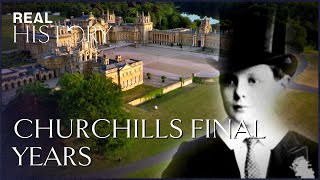
“the end of the British Empire. Kenya is about to gain its independence. For Churchill, the great imperialist, this is a change he just can't get his head around. Churchill was a lifelong believer in B...”