
R
Rubio
Locating
Cross-referencing over 67 channels for appearances
Rubio
Arcmira media summary
Arcmira tracks where Rubio appears across indexed YouTube videos, transcripts, channels, and related entities.
secretary of state Rubio, you go to the other.
six Rubio with 10 of the 14 Bryant off the window
Vance or Rubio whoever is a leader
It was uh it was discussed again with the Ukrainians uh by Secretary Rubio and and many changes were made. ... Some are talking about uh strong differences of opinion, differences of approach between uh for example Vance and Rubio. What are you detecting? Well, I think there are splits. I think they are beginning to emerge on on Ukraine, but perhaps on Venezuela as well. A big part of Trump's base is is really fundamentally isolationist and they don't see why protecting Ukraine is in America's national interest, although I believe very strongly that it is. And they certainly this MAGA base do not want to see Trump start a new war uh in Venezuela. They they thought that he was going to end endless wars, not begin new ones. Uh I think Vance really reflects that MAGA base and I think he is in conflict with Rubio.
4
Mentions
543.2K
Views

"Vance or Rubio whoever is a leader"
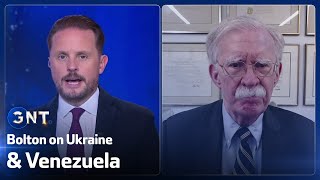
"It was uh it was discussed again with the Ukrainians uh by Secretary Rubio and and many changes were made. ... Some are talking about uh strong differences of opinion, differences of approach between..."

"Rubio spoke at several of our conferences. This realignment that's happening in American politics is not ideological. It is largely the divide between people who work for a living, who live in the rea..."
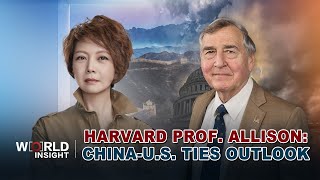
"Mentioned as a potential Secretary of State; changed stance on Ukraine aid based on Trump's view; representative of 'China Hawks' within the Republican Party."
Rubio spoke at several of our conferences. This realignment that's happening in American politics is not ideological. It is largely the divide between people who work for a living, who live in the real world, who have to raise their children and people who live in a fantasy world. And I think he he explicitly sees himself as a national has spoken at number some will say now that I am calling America a Christian nation and so I am. And some will say that I am advocating Christian nationalism and so I do. And let's talk about other people in the administration that there's there's uh important people like Mike Anton uh at the State Department or David Goldman uh Bridge KBY at the defense department. There are many others Steven Miller. I mean all of these people are to one degree or another natcons. they come to our conferences and they contribute and they're a part of it. Now notice who's not a part of it. Okay. That I mean we had this from the very beginning the the the if you if you look at the the uh uh like the the poster the flyer that we circulated from the very beginning we uh distinguished ourselves in two directions from the libertarians which is you know basically the the liberal republican wing at the center that are basically to our left and from racialist uh racialist and anti-democat ratic um movements that are to our right and this has been I mean both sides there's there's there's been friction constantly and and by the way I don't mean that every single person who came to our conferences exactly fits that we have a statement of principles you can read it people know what we stand for but the the key to what we're discussing now is is there a a border between national conservatives and what's to the right of national conservatives I think that the border is clear. I'm not saying that we never make a mistake or there's never confusion about what is the border. Okay, so the border the border is uh from the beginning we said uh we are uh we we do not admit we do not invite people whose platforms are racialist. So the there was a a big you know in our circles anyway a a big uh fight with uh with an uh a publication called Vare which uh is which is a kind of I would call it a racist publication. I it's certainly at a minimum it is a racialist publication. Let's definitely call it that. At a at a minimum var is happy to publish people who are racialists. Right. So so that's that's a minimum. I think maybe you could say more but but for us that that was too much. We did not want to have uh people who are trying to base politics. You you use the word you use the word blood. We should probably come back to it. Blood and soil is uh it's a it's literally a Nazi term meaning the the the the Nazi flag is red and black because it's blood and soil. And uh and that's the same true of of other, you know, quasi Nazi parties in Europe that they use those same colors. We are not interested in a nationalism of blood. But but your your debate with people to your right, which I I take is real, right? And I understand that I understand that national conservatism is not racialist. I think the thing I'm trying to tease out is more your debate with people to your left. So the the reason I keep mentioning these JD Vance speeches and I only I bring him up because to me he is the country's most prominent ideological national conservative. Trump is sort of an intuitive national conservative, but but Vance is more of an ideologist. when he gave that speech, the one at Natcon where he talks about the generations of his people buried in that Kentucky cemetery and the way in which they would fight and die and bleed for their country and the way there is something different about that and he says right, you know, there are ideas and the values of America are important, but he is trying quite explicitly in my view and repeatedly now to sort of to the extent there is a a balance of how much what it means to be an American is a loyalty to the country and its ideas and how much Americanism is about a presence here on this soil that it is something more about being part of the tribe. Um he is shifting towards the tribe. I understand national conservatism as in general trying to shift us towards the idea of the tribe away from something like the, you know, the more Barack Obama or multicultural view that it is about a commitment to all people being created equal. And the thing I I think I am trying to pin you down on here is that if what you all were really worried about was too much what I would call illiberalism, right? too much, you know, pushing people away for holding views you're not allowed to have. I think then the movement would be more interested in uh not doing that. But I think it's about I I understand the argument of NADCON over and over and over again. And I've watched the speeches and I I've come to see you before. I take it seriously. I understand it as an argument that the Democrats, the multiculturalist, someone, the woke left, the neo-Marxists have given up on the bonds that hold countries together and that the the direction they are taking the country in will not leave it with enough cohesion. Cohesion is a word that comes up a lot in your book. Cohesion to be a country. They cannot absorb this many new people. It cannot be this broad in its ideas. It cannot be this dismissive of its traditions. That there is something that the core of this country, the people who have other people buried in the graveyards and that that's an argument made explicitly. If you think I am mischaracterizing, you tell me. But but I think this is the thing I'm trying to get at because to me it's a very live argument in America right now. I I think I think not not only are you exactly right, but I think you said that very eloquently and if you know if if you feel like you know like coming and speaking and not coming and delivering such a speech you you you might get a lot of applause. I I I'm just not sure I understand um what's so terrible about it because because look you're you keep you keep keep bringing up bringing up JD. J D is a a man who true his family's been been here for a long time, but he's a convert to Catholicism. He, you know, he's he's he's he's married to to a woman who's a ch child of Indian immigrants. And, you know, I I I I just think it's a little bit strange to be trying to um to to make him into some kind of like big threat to pluralism. I think that in general uh natcons think that uh that 15% of the American population is foreignb born that it is the maximum that it's possible to for for the country to take before it like it literally starts falling apart. They they really do believe in the possibility of uh of factional and tribal tribal violence and the uh the the impulse to uh to restrict to deport or to have a moratorum on immigration. It's for most it's not it's not an inprincipal argument that there should always be a permanent moratorium on immigration. It's a uh it's literally a reaction to what is seen as um as uh at at this point 60 years of abusive immigration which uh has spun out of control and is threatening the cohesion co just so I don't I I don't I don't want people to be like think it's like a mysterious word. Cohesion is just it's a first of all it's a John Stewart Mill word you know like lots of liberals have used in history. I wasn't suggesting cohesion is a bad word. No, I've I've just I've I've heard people say that, you know, cohesion is like a fascist. Never mind, you didn't say that. Um, but when we're talking about cohesion, what we're talking about is just the mutual loyalty we were talking about. When there's an external pressure on on the polity, on the society, external pressure like an attack from the outside, a revolution from the inside, hatred and contempt internally, financial crisis. When there are pre pressures on the society, do people pull together to rise up to face the challenge because they feel like they're one and they need to circle the wagons and come together or do they fly apart blaming one another? That's what the word cohesion is referring to. I get it. I because I haven't yet said it's bad. I do think it it can go in bad directions. But look, like take you're Israeli. There was a huge huge huge amount of social division in Israel prior to October 7th. There were constant multiund,000 person protests against where Netanyahu and his coalition were taking the country. October 7th happened and it brought a immediate shift in that. I mean this is you know you're nodding. I don't think you would contest this narrative. New York City is a city of immigrants. New York City is a city with more than 15% foreignb born. New York City after 911 had an extraordinary cohesion of identity. national identity which you are tracking is about um tribe and and and family and and JD Vance is tracking is about you know how many of your generations are buried in the cemetery. National identity coheres identity in general coheres under threat. I think this would look very different if America was actually being invaded. Not invaded in the way the Trump administration talks about it but an actual invasion. And that that shows you that solidarity, cohesion, they wax and wayne. They're they're they're situational. They loosen in times of peace time. They harden in times of wartime. I think that's true. Uh but but let me add a caveat that I I don't think it's true that all uh all identities all loyalty groups or identity groups that all of them become stronger under external pressure. There's a difference between a strong identity and a weak identity. I mean it's a spectrum obviously. the the reason that that I write in terms of family, tribe and nation um is is because those are often like very often they are the kinds of things that uh under duress they they strengthen but but not but not always. I mean divorce is uh uh is precisely I'm talking about now family divorces the divorces within families divorce within families is a uh it's an indication of the the the weakness of the the underlying cohesion. So let's bring this down a level of political organization in a way that I think helps make it more legible. New Hampshire and Massachusetts are part of the original colonies in terms of having a continuous physical legacy of Anglosaxon Protestant Americans there and just having a continuous connection to the American story. You you can't do much better than Massachusetts and New Hampshire. Um New York actually too. Uh I'm Californian. My state was formed more recently. My state is far above 15% uh foreignb born, right? My state is a very very very diverse state compared to others. Is my state is California less cohesive? Does it have less political identity? Is it lesser? Is it not working? is becoming California, which in a lot of the trends we're talking about is far more advanced than the nation as a whole. Is California something to fear? National conservatives definitely, but um my my impression is that the identity of the states uh at at this point in American history is in general very very weak. So the the question here is right now in America, is there such a thing as a Californian identity of the kind that would uh for example, I mean this is something people are talking about all the time like the the the the federal government sends in sends in uh troops to Los Angeles and people ask the question is you know uh is the uh the the California National Guard is is it going to obey the orders coming from Washington? Now, my my impression, and I I'm sure you know better than I do, but my impression is that that they will that we're we're not likely to see, you know, in the foreseeable future any kind of like um anti-American violence. you lived off of the the comparison I actually offered though, which is to say that I'm sorry, not on purpose, which is that um I think if you compare I'm familiar with New York, I'm familiar with Massachusetts. I'm familiar with um states that have this longer lineage. And I am saying that I do not believe that that is what creates or separates solidarity. I think my identity as a Californian is as strong as anybody from New Hampshire that I've met. And New Hampshire is tiny, so it's much easier to to to be solidaristic there. But Texans also have this dynamic. Texans also are a younger state. Texans also are a very multicultural state. And I think Texans would tell you that they and frankly I think JD Vance would tell you that they fit that vision of nationalism and cohesion better than Vermont does. The thing I am poking at is whether or not this argument that this more soilbased, lineage-based vision of identity, whether or not it actually is stronger, right? The claim being made is the political claim being made by by by your movement, by your book, is that this is a stronger, safer way to construct a nation and that nations like America have gone badly off course and are getting into more and more dangerous territory. And the Trump administration is built on the idea. Steven Miller is executing on the idea that what they're trying to do is sort of save our national identity by doing some very very violent and aggressive things to definitely make uh America less like California. Steven Miller from Santa Monica um did not like what Santa Monica was growing up, right? Famous for that. And I I I just don't think it's true. I don't think America would be more successful if it built itself like that. I think that we have dramatically outco competed other nations that are far less open than we were than we are even dramatically outco competed nations that are um much less credle than we are. That this vision of like the nation will better hang together and be stronger by being less of this sort of universalistic nationalism and more of this particularistic nationalism. I want to see some, you know, I want to hear the argument for it. Well, I I think I should ask a clarifying question because you you graciously allowed me to uh assert what I think is true that that the that the blood and soil is not a relevant slogan for us. You let me off the blood part. are are are you are you focusing on uh JD's I I thought very moving discussion about where you know where his ancestors are are buried in Kentucky in order to make an argument that that nationalism is about the soil. I am I am saying I I am trying to say like quite explicitly that I think national conservatism that I think JD Vance that I think this movement that you have been a leader in is trying to make a move that is much more focused on the people who have been here right Donald Trump often talks in terms of like you know real Americans that that that is that you are all ideological superstructure for a thing that is happening I'm taking the the ideological arguments here very seriously, but I am saying that I I don't buy them, right? And I don't buy them because I come from a part of this country that is different. And I think my parents, you know, my father's a Brazilian immigrant, my mother, you know, a couple generations back from Eastern European Jews on both sides. I don't think I am less American than people who can trace themselves back to the Mayflower. And I think the implication of a lot of these arguments is that I or people like me are or should be viewed with more suspicion. And I think people always like to defend that. But if they're not going to defend that, I actually don't know what they're saying. Okay. You've mentioned multiculturalism a few times. So let let me just address that directly. multiculturalism I don't you know I don't um I I don't know how far it it got in the like the general public but as an academic theory was very very popular um in you know in in in the 80s and 90s and 2000s it's a very optimistic theory uh-cau because what what it assumes is uh that there's going to be lots of internal diversity which but notice that nationalists and conservatives also think there's going to be lots of internal diversity the the arguments between them is whether there has to be a center in order to hold the thing together in order for a society to be able to uh endure over time. Much more important than the question of how many generations have the people been here. Much more important than that is the question of is there a is there a dominant culture that is consists of group or groups that that have a strong loyalty to one another. If there is such a thing then there can be lots of minority groups that have very different um approaches. They can be closer or further. They can feel you know more a part of it or less. But it was possible to have a successful relationship with all sorts of small minority groups when you could count on there being a uh a a a center. That center recognized that America was founded by Anglo Protestants. recognized that America was also uh a nation that brought in Catholics and Jews in large numbers and succeeded I I think very very well in in uh in in bringing Catholics and Jews into this Anglo Protestant country and not without problems but it it worked and the um the claim that you know the fact that it was a Christian country you know that up until the 1930s Supreme Court still referred to Americans as a Christian people, that it was legally a Christian country, that it was culturally run by Protestants. That didn't make it, you know, didn't prevent it from being, despite its many flaws, from being, you know, something that was really beautiful and superior to to many other countries in the world. So the question then is and this is I think this is really the argument maybe between you and JD or you and me is is whether the success of that enterprise whether you can learn from that that the um that the center the central place of u of Anglo Protestantism in America with a strong Old Testament um uh taste um the English language, the common law, you know, I don't expect everybody to be common lawyers, but I do expect people to say um yes, the jury trial is not it's not a a universal dictate of reason. It it it is it's an Anglo tradition and it does what it does because the people here believe in this Anglo tradition, not all of them, but a core. And so if you have that then I think you can you can bring in lots of immigrants and you can you can get them to adopt those ways. If you don't have the center and then it becomes possible for groups for immigrant im immigrant immigrant groups but also other groups not just immigrants it becomes possible for secessionist groups of different kinds religious sectoral whatever to to to say you know well actually um we live here and we have rights here but you know we detest the inheritance of this country and and we're going to you know do whatever we can when it becomes possible. to overthrow it and end it. That That's what JD is reacting to. He's not reacting to like there shouldn't have been Catholic immigrants. That's absurd. He's But isn't isn't the history here a sort of inversion of this because this is really helpful, right? I think we're really getting to the the core of this. But I I look back on American history and you're saying, well, this is what creates the the risk of civil war. Okay. The risk of civil war was a lot of states that would uh sign on to everything you're saying did not like there was a really there was a profound disagreement over whether or not there should be slavery and whether or not the people in this country should have any form of equality and they tried to secede. It feels like a lot of places that are highly nationalistic are not actually that stable. They become imperialistic. Right? That's a lot of Europe in the 20th century. um or the sort of modern more nationalistic right does not feel to me more tolerant and more interested in making sure the bonds between us are strengthened and so it just feels to me like when you output it to the real world I I sort of understand the argument here but it it doesn't hold together the idea that we would have a stronger nation on the other side of this vision this is why I brought up places like California because I agree that our national identity is at this point stronger than our state identities but our states are still meaningful to us. I can tell you it's meaningful to me. And California has less of that American center that you are describing, that Vice President Vance is describing, than um uh New Hampshire does, has less of that center than a bunch of older states. It's more diverse. It's more credle in that way. It's a very successful polity. You're the people on the right can say what they want, but the reason we debate California is that it matters. It invents the future. It's a remarkable place. It seems like a lot of our history in this country speaks to the value of openness. The success of places like Texas and California speaks to the value of openness, the ability to hold people together at incredible scale. And when we've had secessionary problems, um, and we've had people, you know, saying elections are, you know, actually trying to storm the capital, it's come from people who say that, you know, they they really that they're part of that Anglo-Saxon background that that, you know, all trying to do is hold the country together. There just to me is a contradiction in this. If at all if there wasn't, I wouldn't be arguing it with you. Yeah, I understand. I mean, uh, look, I mean, it's a, uh, um, we're look, we're looking at a lot of the, you know, overwhelm, it seems like we're looking at overwhelmingly, uh, the same set of facts and and we, we have different frameworks that are uh, uh, that interpret and that that's completely legitimate. And a lot of the issues that if you ask, you know, like these these natcons people, you know, for whatever reason, people have a um this not you in particular, JD Vance has captured America's imagination in good and bad ways, in a lot of ways, but uh Marco Rubio's been around for a long time. Um, he's he's also like a superb person and I I'm I'm very very impressed with uh with with the work that he's doing and and his his his presence on the American stage, but even though he's somebody who, you know, he was he was part of the the much more liberal Republican party for a long time and now people are accusing him of, you know, of being, you know, like the the executioner for doing things like uh like uh um uh checking checking checking the free speech u um restricting the free speech of people of of immigrants or people on student visas and punishing them if they say the wrong thing. Now I I think that you know I think from a liberal perspective that that's a completely legitimate description of what's going on. But I don't, you know, I don't think that uh that that Secretary of State Rubio from his perspective that that's what he thinks. what he thinks is that that the the general overopenness, not the fact that there is openness, but the fact that the openness has gotten to such a point that um that political movements uh I mean in in particular they're they're focusing on uh political movements from the Middle East, you know, which you can agree with or disagree with, but the the principle of his saying,
Arcmira tracks 2 indexed media appearances or mentions for Rubio, tied to source videos, channels, and transcript-derived context.
Arcmira uses indexed YouTube videos and transcripts. Representative source evidence on this page includes "Zelenskiy Turns to EU Allies as Witkoff Heads to Russia" with transcript-derived context and links when available.
Rubio is connected to Agents, Palo Alto, Ukraine in Arcmira's media graph.